/images/69709852-a009-4873-8b47-a72bcce0f989/Helsinki_BLOG.png)
Meet Our Members is a series where Liberties introduces you to our network of human rights defenders. We hear the stories of the people behind the organisations and why they do the work they do. Liberties is an umbrella network which coordinates campaigns with its expanding network of national civil liberties NGOs in 18 EU Member States.
Zuzanna speaks about her work with quiet defiance. No grand declarations or sweeping ideals, but with persistence in the daily decision, to keep going.
“I just think it’s important,” she says simply. “I couldn’t imagine doing something that is not for the public good.”
Zuzanna is a lawyer at the Helsinki Foundation for Human Rights in Poland, where she focuses on freedom of expression and strategic litigation. But her path into human rights law wasn’t linear.
After studying law and working in various law firms, she realised something wasn’t quite right. “I was simply not feeling it,” she recalls. “I did not find myself comfortable working in those conditions.”
Despite early exposure to human rights work through internships, NGO roles, and advocacy campaigns, it took time to fully embrace it as a career. A formative moment came after graduating, when, uncertain about her next steps, a position at the Helsinki Foundation appeared unexpectedly.
Her interview, she admits with a laugh, did not go well. “The internet connection was really bad… I couldn’t hear half of the things,” she says. “But for some reason, they trusted me, and I got hired.”
That was four years ago. She has been there ever since.
A Personal Connection to Freedom of Expression
Zuzanna’s work today, defending freedom of expression, is deeply personal. She grew up surrounded by journalists: her parents, grandparents, and extended family all worked in the media.
She explains that, from an early age, “I was a direct witness of the worsening situation in the media.”
Although she initially wanted to study journalism, her parents encouraged her to pursue law instead.
Today, her work spans litigation before national courts and the European Court of Human Rights, legal advocacy, training, and public engagement. She drafts opinions on legislation, contributes to coalitions, and even hosts a podcast discussing pressing issues in Poland.
“It’s everything,” she says of her role. “Litigation, advocacy, writing, training - all of it.”
Navigating Complexity and Contradictions
Much of Zuzanna’s work sits at the intersection of law, politics, and public debate: a space filled with nuance and, often, misunderstanding.
One of the most persistent misconceptions she encounters is the idea that supporting freedom of expression is incompatible with regulating harmful content.
“People think it’s a paradox,” she explains. “But it’s not. Freedom of expression is not an absolute right. You always have to balance it against other rights.”
In Poland, this balancing act is particularly complex. While new EU-driven initiatives such as anti-SLAPP protections and the European Media Freedom Act aim to strengthen free speech, other laws and practices risk undermining it. Defamation remains criminalised, and debates around hate speech regulation continue to evolve.
For Zuzanna, navigating these tensions is not about choosing sides, but about holding the line and ensuring that rights are protected in a way that is both principled and realistic.
The Weight of the Work
Behind the legal arguments and policy debates lies a more human reality, one that often has a personal cost.
“This is a very emotionally draining job,” Zuzanna admits.
Clients call in distress, sometimes in tears. Others are angry, frustrated, or desperate for help that may not always be possible to provide. Even when she is not working on the most extreme cases, the emotional toll is ever-present.
“You have to be very resilient,” she says. “You bring the job home with you, it affects your life, your relationships.”
And yet, she stays.
What keeps her going is not a single landmark case or headline victory, but something quieter: the cumulative impact of small, meaningful moments.
“Sometimes it’s just listening to someone,” she reflects. “Sometimes it’s just being there.”
She recalls a case involving three women targeted in a SLAPP lawsuit linked to trade union activity. The legal proceedings were ultimately withdrawn - not through courtroom arguments, but only once media attention pressured the opposing side.
But what stayed with her was not only the positive outcome, but the three women “telling [told] us that the fact that we were there for them was extremely important.”
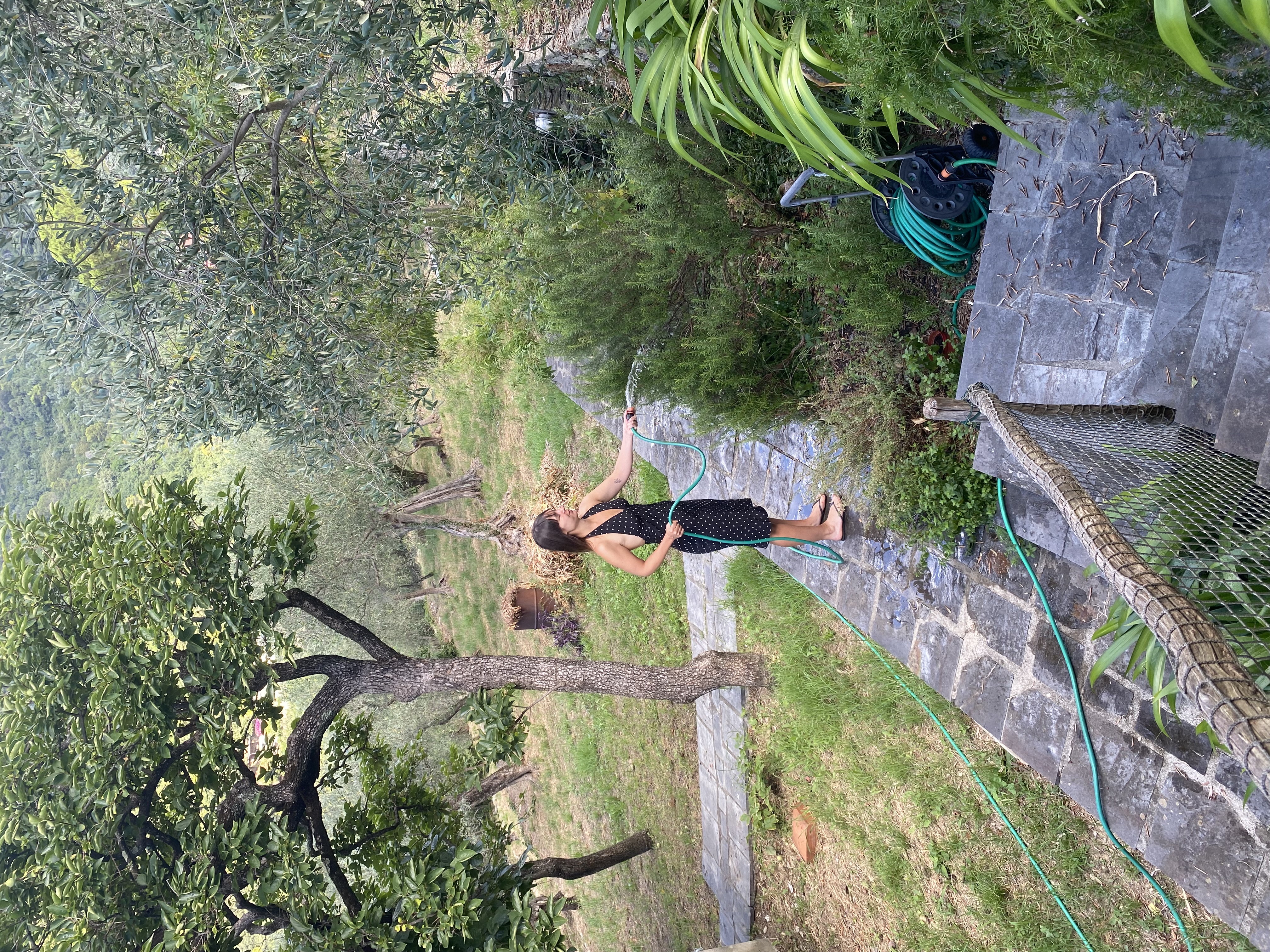
"A photo of me in my happy place in Liguria, where I go every summer." - Zuzanna
Persistence Over Perfection
When asked about her proudest achievement, Zuzanna does not point to a specific case. Instead, she speaks about endurance.
“I think what I’m most proud of is the persistence,” she says. “I just keep going.”
It is a job that demands constant adaptation, from juggling multiple areas of law, responding to rapidly changing political developments, and managing a heavy workload. At any given time, she may be handling around 20 ongoing cases, alongside urgent advocacy work.
It requires, as she puts it, a certain comfort with “mild chaos.”
“I like when a lot of stuff is going on,” she says with a smile.
It’s the Actions that Count
In a field often defined by setbacks and slow progress, Zuzanna has found her own way of maintaining hope.
“I try not to look at the bigger picture too much,” she explains. “I focus on individual cases.”
It is in those individual moments, such as a case won, a client supported, a message of gratitude, that she finds reassurance.
Outside of work, she runs regularly and leans on friendships to disconnect. But even then, the work is never entirely absent.
For Zuzanna, human rights work is not just a profession. It is a commitment grounded not in abstract ideals, but in action.
As she puts it: “If you remain indifferent when something bad is happening, it’s almost as if you caused it.”
Zuzanna chooses not to be indifferent.
More articles in the Meet Our Members series
Coming Home to Defend Democracy
From Conviction to Court Cases: When Activism Meets the Law
A 24/7 activist, whose campaigning instincts come from the arts
/images/fd901090-2b8c-422d-9bf8-df510573598c/CILD_BLOG__1_.png)
/images/9d47f29e-5eb6-4938-a9b4-0e11df364771/hclu_BLOG.png)
/images/719924bf-c273-4e9a-a91f-95f086324319/nyt_europa_BLOG.png)