/images/221e91e9-7c74-459f-b782-1dfa9cc04abb/BLOG_image__5_.png)
Originally, the EU AI Act included safeguards to protect our fundamental rights from the harmful and discriminatory uses of AI. But the AI Omnibus puts those protections at risk. The AI Omnibus was proposed in November 2025 as one of the ten (and counting) Omnibuses designed to de-regulate legislation, aka “reduce administrative burdens” in Commission-speak.
The Fable of Little Red Tape
The current majorities in the Commission, the Council and the European Parliament align with the view that the problem of Europe being in economic decline and behind the US and China on many technological fronts is because… there are too many laws that prevent “innovation”. They do not explain how those same laws, which also apply to technological giants, do not prevent them from further consolidating their market dominance.
“Today’s adoption of the AI Omnibus in the European Parliament weakens fundamental rights protections in the AI Act, delays enforcement of key provisions, and empowers Big Tech companies. The adopted text makes it more difficult to protect people from invasive AI, empowers industry actors and begins the dismantlement of digital protections in Europe,” said Diego Naranjo, Senior Advocacy Advisor at Liberties.
The AI Omnibus and the Digital Omnibus (also known as Data Omnibus) are the two current proposals that focus on digital legislation. While the AI Omnibus addresses the AI Act exclusively, the Data Omnibus affects the ePrivacy Directive, the General Data Protection Regulation (GDPR), and other laws.
The AI Omnibus: Adopted in just 7 months
On 16 June, the European Parliament adopted the AI Omnibus by a large majority of 423 votes in favour. The adopted text will weaken AI Act protections, delay the enforcement of key provisions, and empower industry actors. As mentioned above, this move is part of a wider deregulatory trend, in which Omnibus proposals are being used to amend multiple laws at once, at speed, and without proper impact assessment.
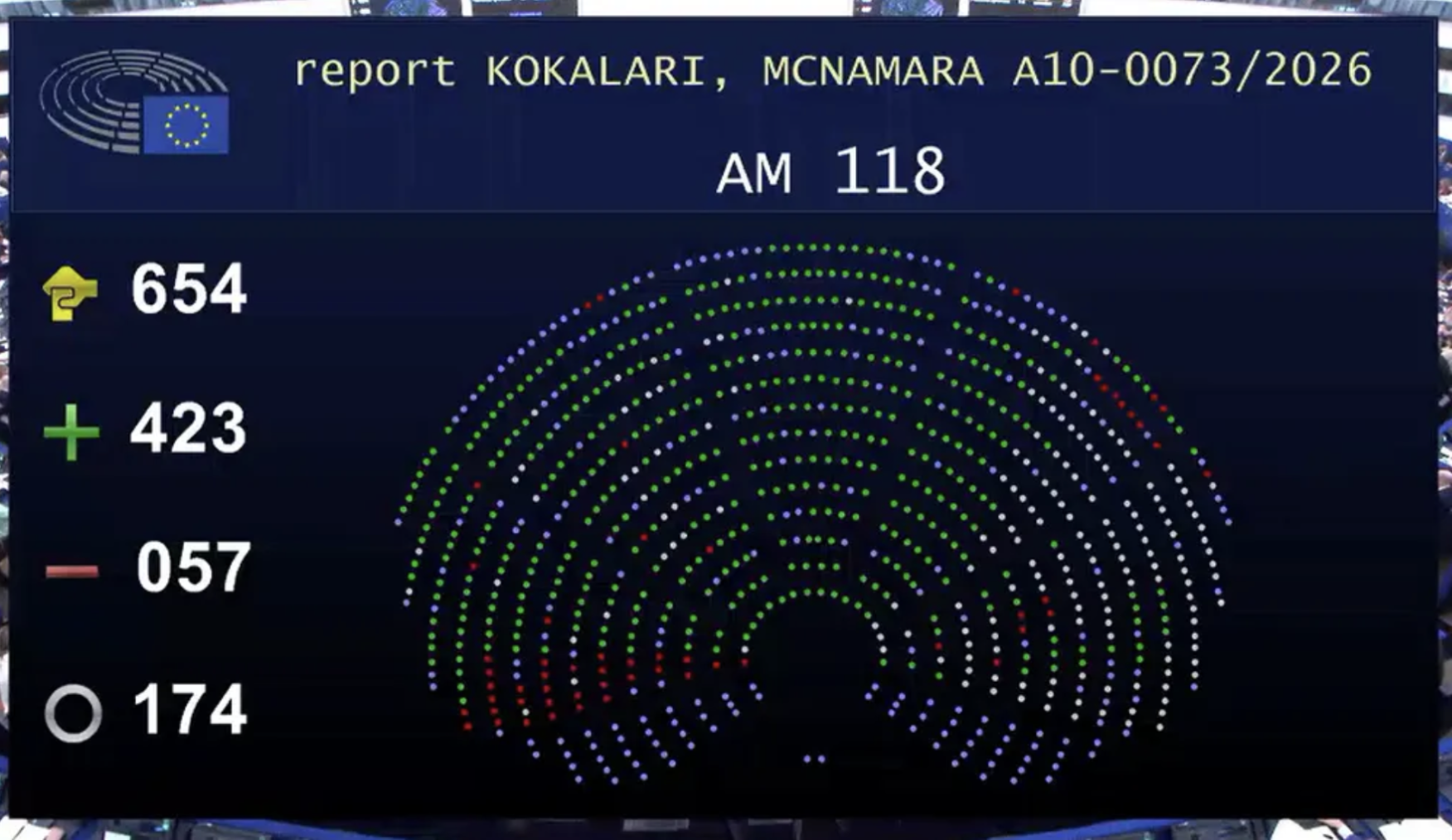
This breakneck pace, coupled with the fact that parts of the AI Act have yet to take effect, renders this process a defeat for the rule of law. There was no impact assessment, and no meaningful consultation. Civil society was formally consulted, but the process too often felt like a box-ticking exercise to impose deregulation ideas already shaped by the pressure from business and the tech industry.
“The AI Omnibus is a huge step backwards for a more accountable tech environment in Europe. It delays safeguards before they can take effect, weakens transparency obligations, and creates loopholes that primarily benefit tech companies. Europe should focus on enforcing the safeguards it has already adopted, not dismantling them through rushed legislative processes. We need a public-interest vision for tech policy. Transparency, accountability, and effective enforcement are not obstacles to innovation. Rather, they are the foundation of trustworthy and rights-respecting technology”, said Eva Simon, Head of Tech and Rights at Liberties
For Liberties, there are two main concerns. First, the impact of the Omnibus on the fundamental rights of people. Second, the lack of respect for the right processes, transparency, and proper discussion is the basis of the rule of law. The rush did not allow experts and civil society to discuss the real need for such an Omnibus before the AI Act even entered into full force. This lack of respect for democratic processes reflects the new realities in the European Parliament, which differ from those that adopted the AI Act and are also vastly different from the political majorities when the GDPR was adopted. The Council and the Commission reflect this same reality, to a great extent, with pro-industry policymakers accepting any demand that brings more “flexibility” for the industry sector and treats fundamental rights as sacrifices, hoping that this will bring more innovation and competitive advantages for the EU tech sector.
What is changing?
- Enforcement of key provisions has been delayed (Art.1). Some of the most worrisome high-risk systems will not be subject to all foreseen protections until 2027 or 2028. Initially, the full enforcement of the AI Act was scheduled to start this year.
- Registration is still required for all AI systems (Article 6(3)): AI systems classified as “not high-risk” must still register in the EU database. But since transparency obligations have been weakened in Article 11(1), AI providers will have to disclose less information to the public. SMEs and start-ups can offer “simplified technical documentation”. What this simplified list is will be developed by the Commission. As the saying goes, "the devil is in the details", and these documents are precisely where such details exist. They receive much less attention from the public, and there is the risk that this “simplified” list becomes unusable for monitoring purposes.
- Mixing data protection with other fundamental rights? (Art. 27(4)): The new text requires Fundamental Rights Impact Assessments to be cross-referenced with Data Protection Impact Assessments. This risks blurring the distinction between these two safeguards. This could allow companies to treat narrower checks as sufficient, reducing the depth of rights-based scrutiny.
- AI in machinery has been moved within the AI Act (from section A to B in the Annex I), so it falls under sectoral legislation outside the AI Act when overlaps exist, creating a loophole that responds to industry interests. This was a direct demand from the German industry.
The AI Omnibus is one of 10 and counting Omnibus proposals on a wide range of issues. We are concerned that if tomorrow's vote succeeds, it will empower the tech industry to weaken other digital laws protecting our rights that were adopted over the last decade.
EU lawmakers have lost the opportunity to protect the integrity of the AI Act and preserve strong transparency and accountability obligations, and instead used fast-track Omnibus processes to weaken digital rights protections.
We deserve digital rules protecting our rights to be enforced, not dismantled before they take effect. Liberties will monitor the implementation of these changes along with our members. In the meantime, we will continue our advocacy work to protect the data protection and privacy of people in Europe in the Data Omnibus.
Are you in Brussels on 23 June? Join us for our dedicated event co-organised with EDRi, CDT, Article 19 and many other civil society groups. Register here.
Further resources
Digital Omnibus on Data Protection: From Global Gold Standard to Corporate Giveaway
Digital Omnibus: Quick Analysis
Liberties' response on the Digital Omnibus simplification package
/images/832089d7-bd32-4484-8bc2-b21a4caa092d/BLOG_.jpg)
/images/51bf560a-ce4b-4fef-880c-9a84eefd2641/Blog_2000x1400.jpg)
/images/fd901090-2b8c-422d-9bf8-df510573598c/CILD_BLOG__1_.png)